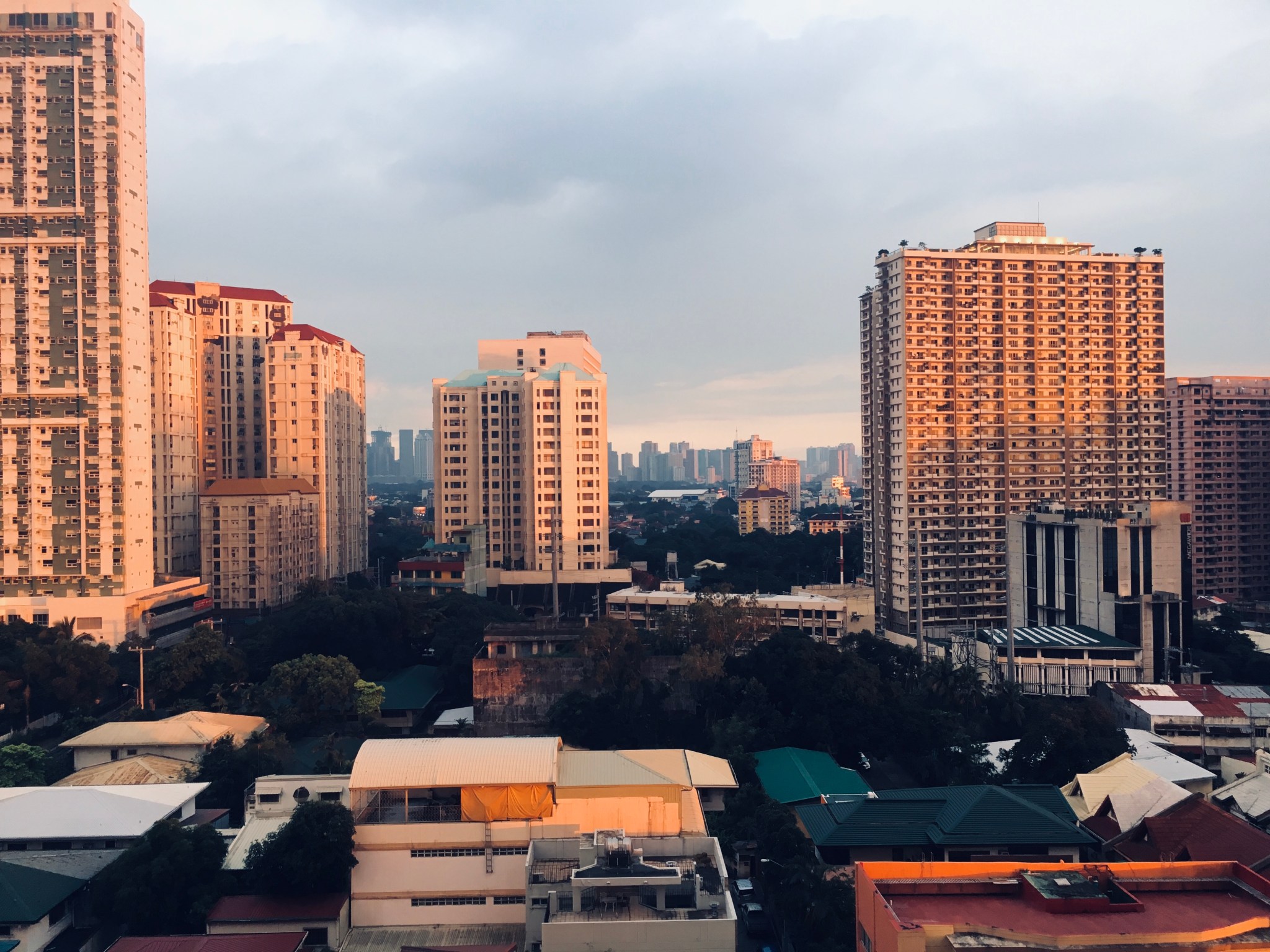
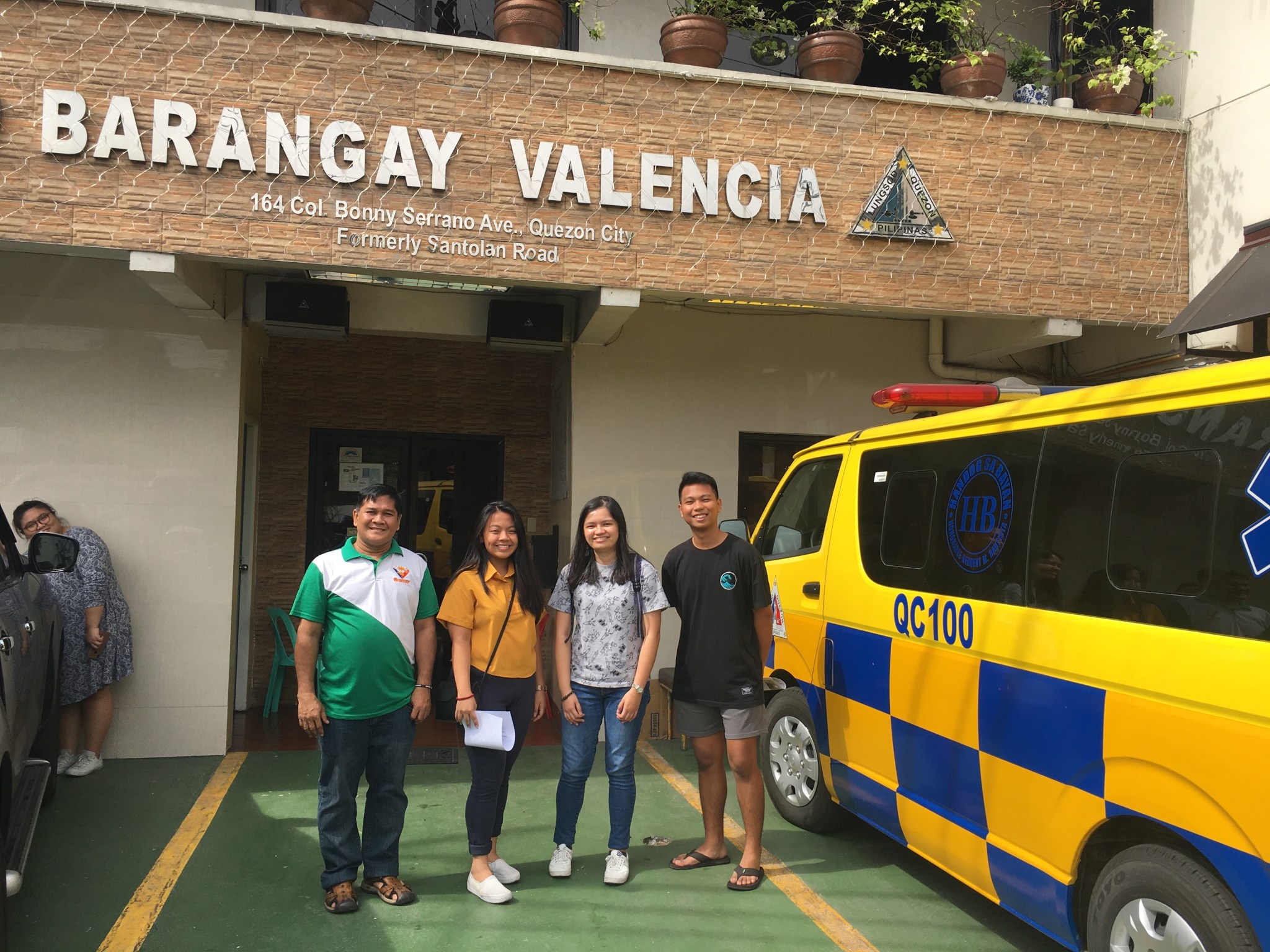
For a few months now, I have been staying at one of the high-rise buildings of Barangay Valencia, Quezon City. Since my stay, I’ve been wondering where my co-tenants and I, as well as other residents of the area, will evacuate and temporarily stay at, say in a time when a strong earthquake such as The Big One occurs. This is because there is not much open, safe space that is close to the building I’m in. To add, there is even a train station and tracks beside my building, so it builds up my anxiety more knowing that I am unprepared. Fortunately, I conducted an interview with an official of the barangay, with the help of a school requirement, to raise a few questions regarding the barangay’s plans and actions, and to finally silence my restless thoughts.
Hazards
Fire
According to Kagawad Eugenio “Eugene” Gabor, the main hazards that the barangay faces are fire hazards. In Area 1 of the barangay, houses made of light materials such as wood and metal are widespread. These houses are too close to each other, which makes the fire spread easily and makes narrower walkways that are not enough for fire trucks to pass through. In addition, I also observed that the electrical wires were hung too low and entangled with trees, increasing the susceptibility to fire in the area.


However, despite these, the local government has made an effort to address these issues. They cemented the ground of the areas which were previously burned down, and added fire hydrants, accessible hoses and fire extinguishers in the area. They have also replaced the materials of the houses to cement, which may decrease the incidence of widespread fire.


Flood
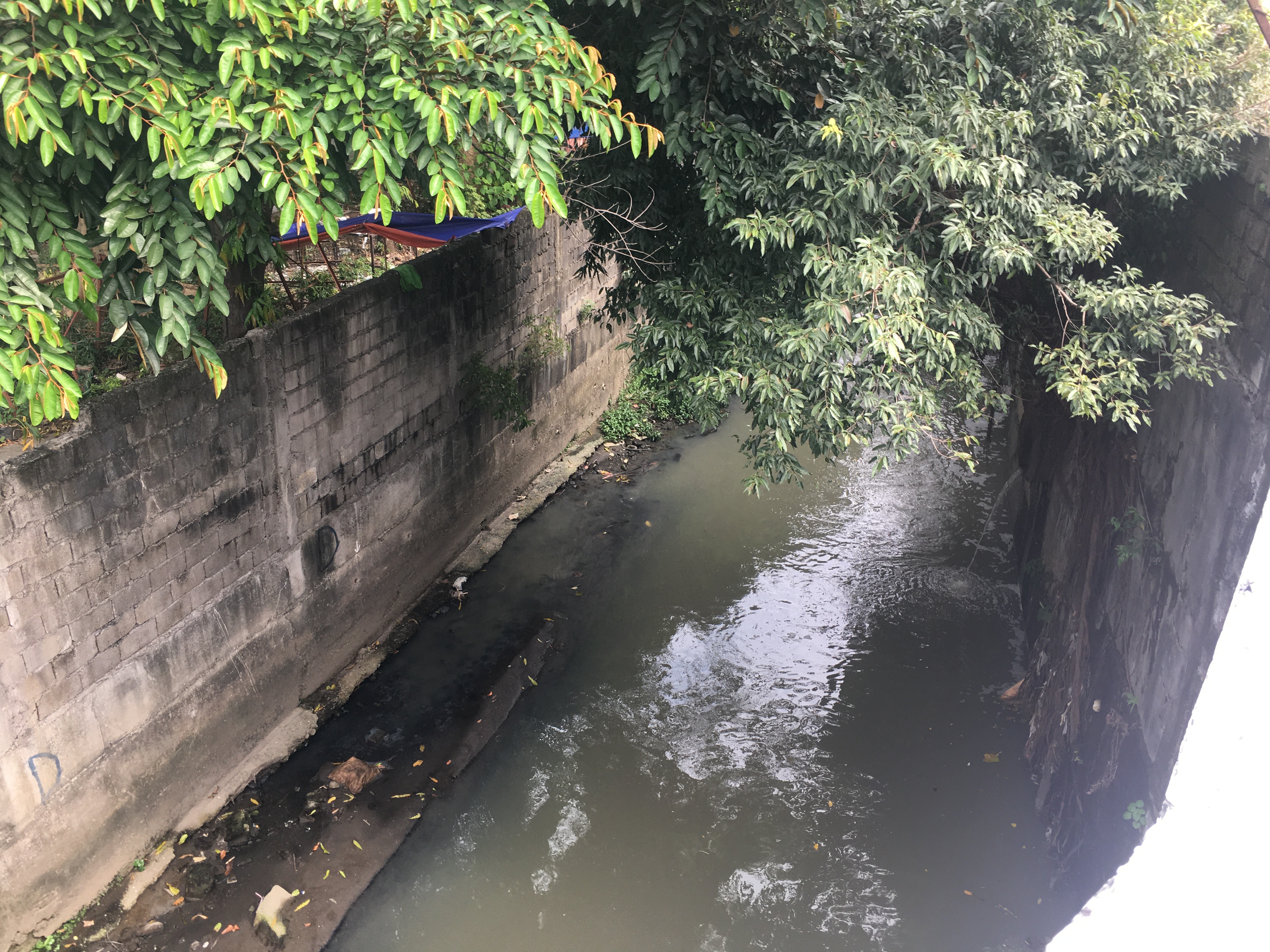
Due to its location on high ground, the barangay isn’t considered a flood-prone area, but there have been floods in the past wherein residents living near a creek (Ermitaño Creek) were affected the most. However, this was resolved by the officials by relocating more than 90 families that lived 3-10 meters away from the creek to Pandi, Bulacan with concrete 40-square-meter, two-story houses with water and electricity. They just had to pay P200 monthly in exchange for their stay.
Earthquake
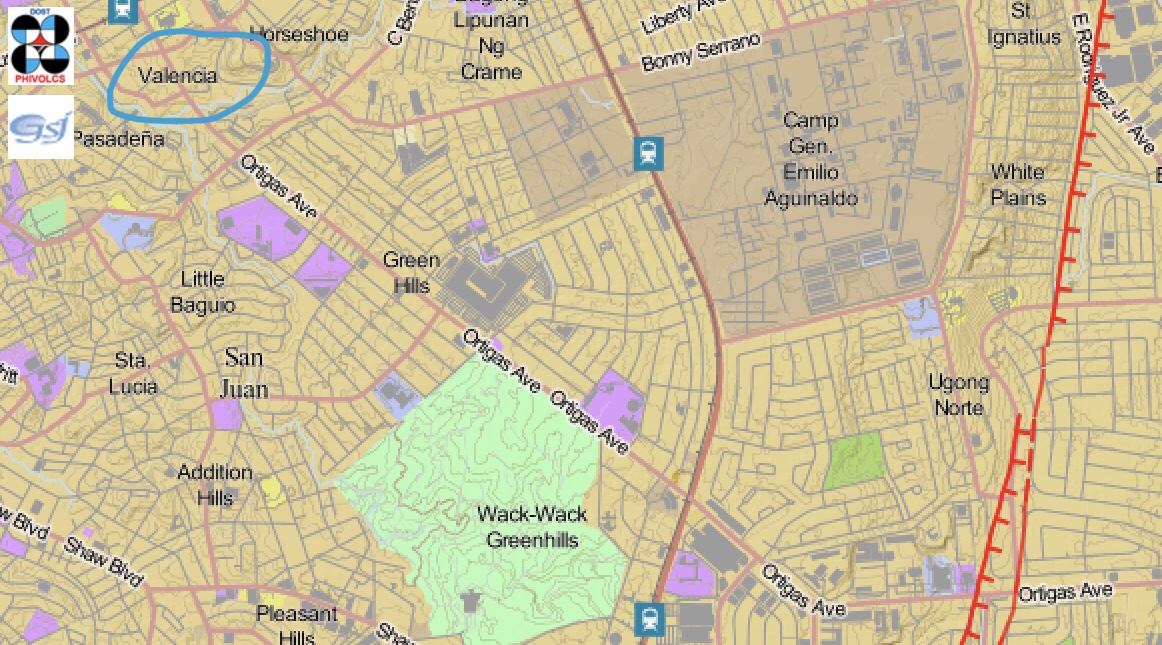
As for earthquake hazards, the barangay has not encountered any fallen structures since the 1980’s, but we can’t be sure that the structures now are still as stable, especially since there are high-rise buildings and condominiums in the area. The barangay is situated quite near the Valley Fault System, which means that we will be affected by the imminent Big One. With all these hazards present, the people most affected will be the ones staying in Area 1 who are also most afflicted by poverty, and the ones living near high-rise buildings.
Response
As for the actions the Barangay will take in case emergencies and disasters arise, they have proudly formed the Valencia Elite Team (VET), a group of educated, competent volunteers, knowledgeable on First Aid, minor surgeries, and self-defense such as Muay Thai and Arnis, who are the first responders in case of fire, earthquake, typhoon or man-made incidents. These volunteers are also professionals as some are registered nurses and medical technologists. They are on the watch 24 hours, which keeps not only barangay Valencia emergency-ready, but neighboring barangays as well. Aside from the VET, the barangay unit also conducts DRRM seminars and trainings for the staff and residents every two to three months. Furthermore, Valencia was also one of the barangays gifted with legal and official digging tools by the MMDA for earthquake disasters. Kagawa Eugene said that instead of placing it in front of the barangay hall, they decided to store it in a government-provided Foton van, which was designed to be an on-the-go response transportation.


For emergencies, the safe areas that were recognized are the open, unused lot in front of the Barangay Hall (previously a gas station), the wide road in front of the Hall, and the open basketball court by Granada Street. The hazardous areas, on the other hand, include Area 1 (the area with unstable houses) and Area 5 (near the creek).


Own Thoughts
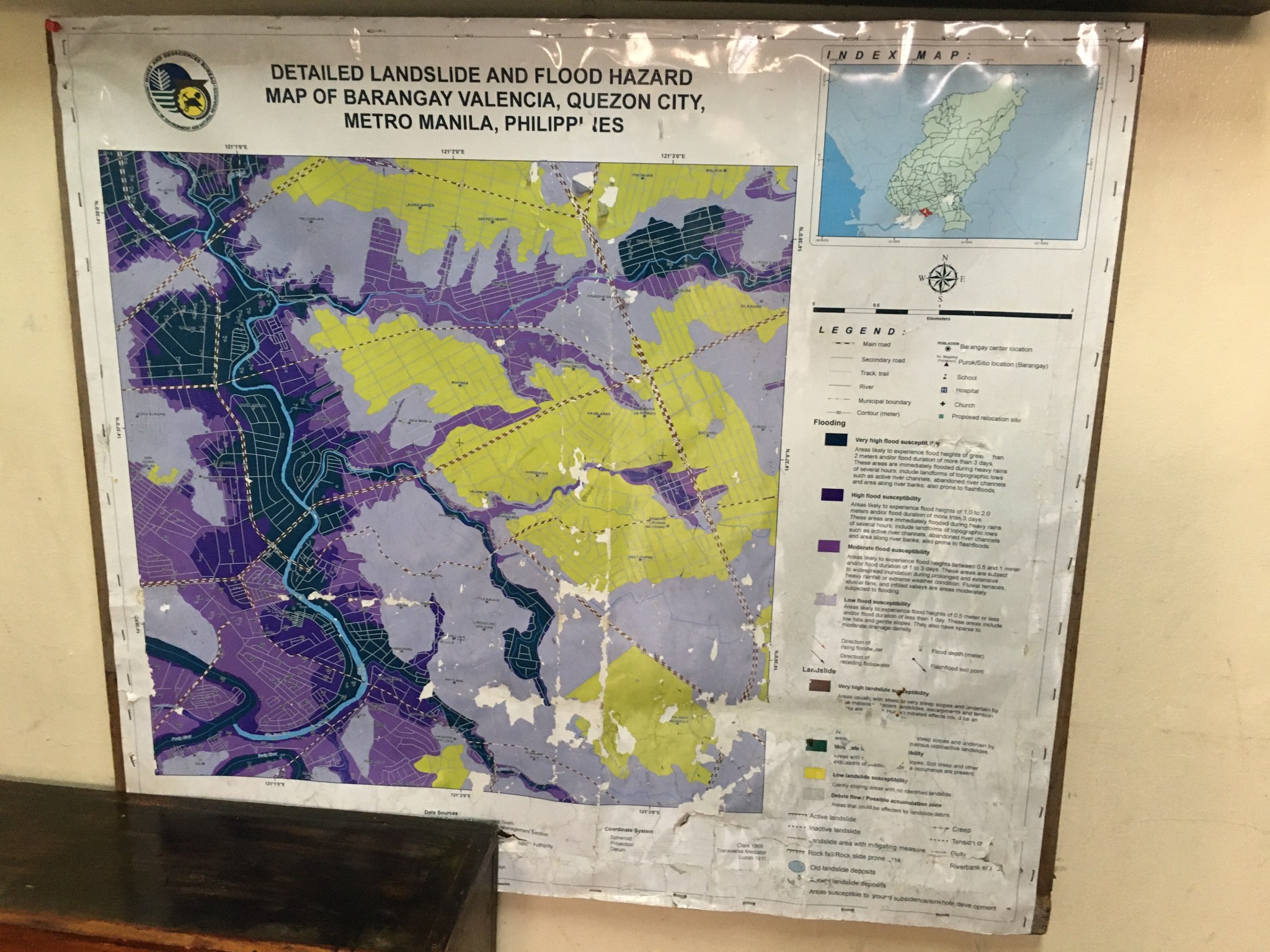
I think that the Barangay has made effective solutions to their issues, however there are some comments and suggestions I would like to raise. First, their evacuation centers or safe areas seemed to not be enough to accommodate the people and truly be a “safe” area because: (1) the unused area across the Hall, although spacious, is not a conducive area due to the cracked and uneven ground and tall grass, and (2) the basketball court seems to be a small area and cannot provide the security the people need, for instance during typhoons, since it is “open” and not covered. With this, I suggest that they provide an official and safe evacuation center. Another suggestion I’d like to propose is to create a simple yet complete hazard map, which the people could easily understand because although they do have a detailed hazard map, it seems quite old or outdated and difficult to understand. I think a hazard map is vital because it simplifies the objects or areas that can potentially cause harm, and helps people understand the dangers around them more.
It is only a given that each area in the Philippines, not only this barangay, will have numerous hazards and will be disaster prone because of reasons such as the natural geographical location of the country. This causes the country to be prone to typhoons and earthquakes. Moreover, areas where poverty is prevalent are also vulnerable to fire and flood. Therefore, we need to address the issue of disasters because disasters are inevitable in our country, but we can do our best to mitigate the consequences by anticipating and preparing for them. We all have a vital role, so as members of this community and this nation, every one of us should be active and cooperative with the plans of the Barangay. By being active, one should drop by the barangay’s suggestion box when we have concerns or see something that must be addressed (e.g. illegal substance users or inefficiencies of the government), so they can be addressed immediately. On the other hand, by being cooperative, one should participate in different drills conducted by the barangay, the city and country.
More Information
Other notable actions that the barangay did included projects that involved ex-drug addicts, senior citizens, and children. Even before the current president’s project of Tokhang, the barangay has already been organizing a project wherein former drug users who have surrendered are given opportunities to transform their lives. The barangay conducted a rehabilitation program consisting of retreats, assistance for livelihood or employment, free haircuts, dentures and dental cleaning, and spiritual direction seminars in cooperation with a Catholic priest and a Christian pastor of nearby churches. To add, some of the participants are now working as barangay tanods, who were also trained with slightly advanced self-defense skills.


Furthermore, the barangay also involves senior citizens in various activities, such as Zumba exercises and monthly birthday celebrations. They also bought massage equipment, which can be used for free by the aged. As for the children, the barangay opened the Valencia Early Childhood Learning Center at the Barangay Hall in hopes of offering good education to children of the barangay.


With all the local government unit’s different programs, the barangay has been awarded with different recognitions from the Quezon City government. These include a Plaque of Recognition for being a Drug Cleared Barangay in 2017, a plaque for being the Most Functional Barangay-based Institutions in 2016, and special awards for Best Practices and Innovations in 2017 and 2018.
To conclude…
To conclude, it can be said that the barangay is functional in preparing the community for unwanted events and creating programs that will aid and empower them, although there are things that can be enhanced as there is always room for improvement. Throughout the interview, I’ve realized that the barangay officials pay close attention to their projects and actually perform their jobs efficiently and effectively. I’m not assuming this based on the interview, but based on the concrete results that they were able to achieve from their actions. Their programs really did aim for the end goal of community development—empowerment. Kagawad Eugie even jokingly said,
“Gawa lang kami nang gawa kasi wala na kaming magawa”,
but it just reflects their intention of simply wanting to make the most of their abilities and resources to serve the people of Valencia and our country; I think that we, ordinary citizens, should have this too.
Sources:
https://effectivemanagers.com/dwight-mihalicz/the-secret-formula-for-successful-empowerment/
 books & baked goods